


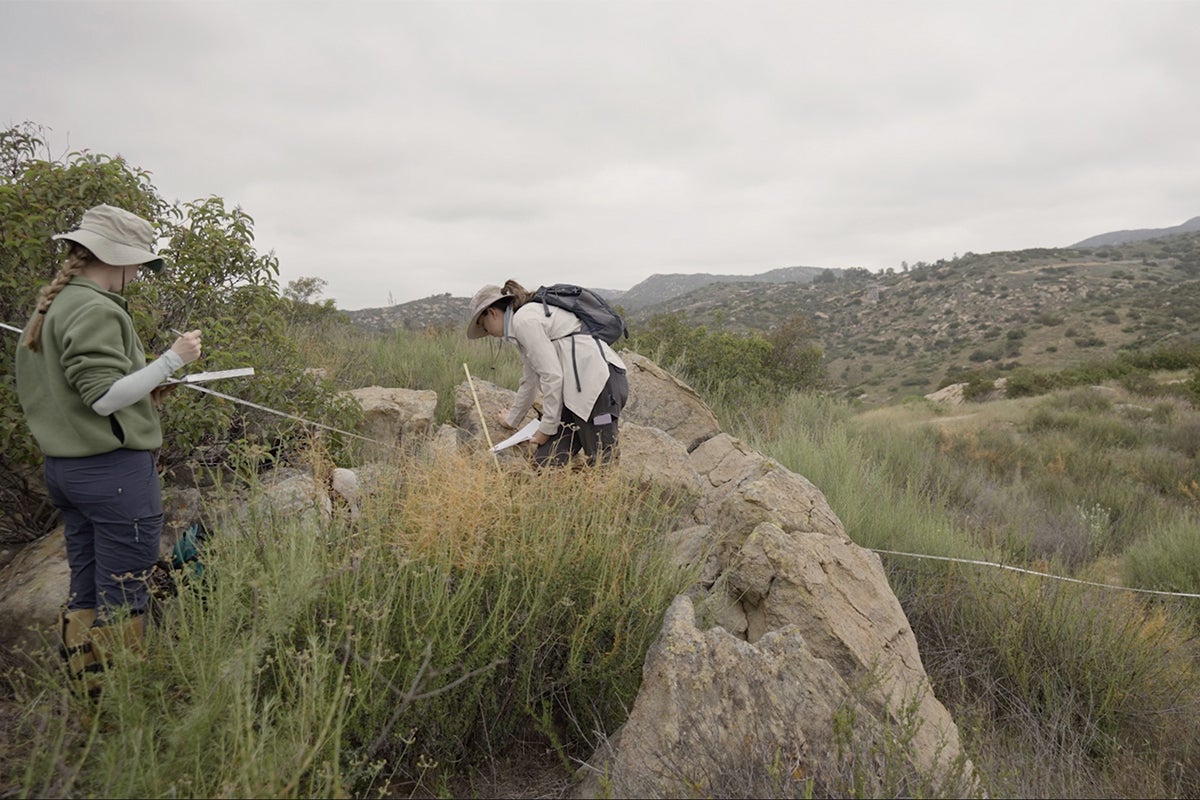
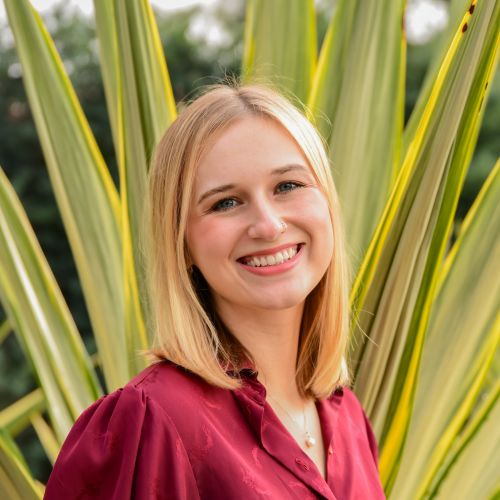
What we knew about wildlife for a long time came from observations taken in the field, witnessed only by human eyes or ears. Sometimes these observations were shared within communities through spoken word. Then discoveries began to be recorded by hand. With this tried-and-true method, we learned slowly, over time. But there was a lot we were missing.
Throughout the last few decades, technology has rapidly progressed. Our society went from typewriter to computer and telegram to text at lightning speed. As technology changed, so has our ability to use it to gain crucial insights about wildlife to better save, protect, and care for them.
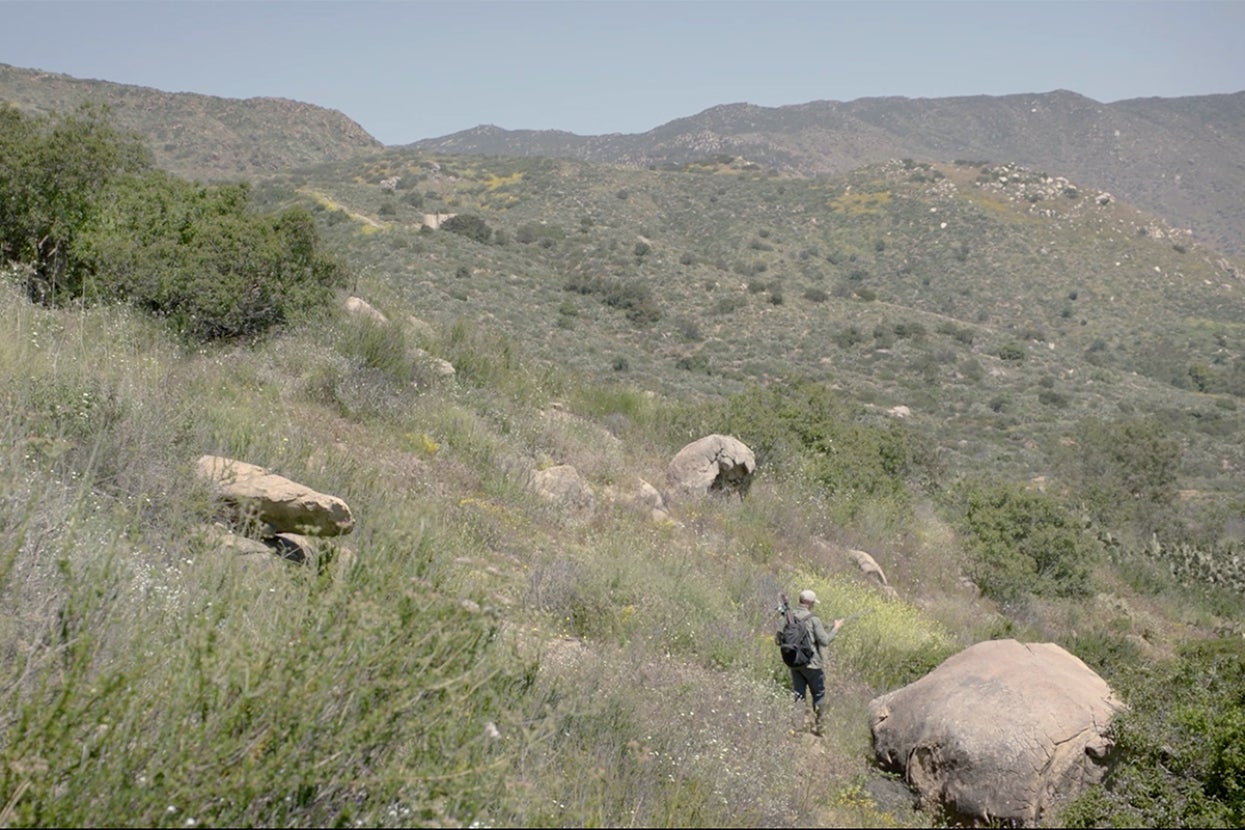
The Conservation Technology Lab develops innovative and scalable tools to protect biodiversity right here in the Southwest and across the globe.
New Tools for a New Age
San Diego Zoo Wildlife Alliance’s Conservation Technology Lab is at the forefront of advancing innovative and scalable tools that can be used to protect and restore biodiversity. We’re harnessing the power of artificial intelligence (AI), machine learning (ML), and advanced animal-borne and environmental sensors, in addition to the integration of both off-the-shelf and bespoke technologies to discover cutting-edge conservation solutions.
The powerhouse team of software and hardware developers operate at the crossroads of engineering and conservation. They unite their talents to collaborate with scientists and external partners to design, build, and refine tools that are deployed across our eight Conservation Hubs.
Tech in Our Own Backyard
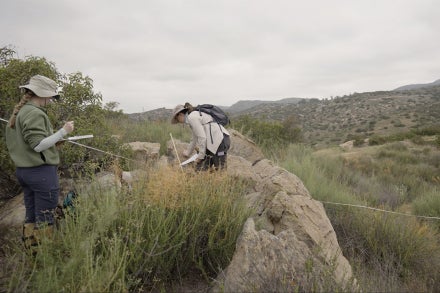
Behind the San Diego Zoo Safari Park, our Biodiversity Reserve stretches over 1,000 acres. This critical wildlife corridor preserves native coastal sage scrub and chaparral habitat—one of the largest remaining expanses of this type in the region. This reserve is the perfect place for our Conservation Technology Lab to learn more about the wildlife we live alongside. It also acts as testing grounds for new devices to be implemented. If a tool is successful in our Southwest Conservation Hub, there’s a high possibility it could be applied in other Conservation Hubs as well.
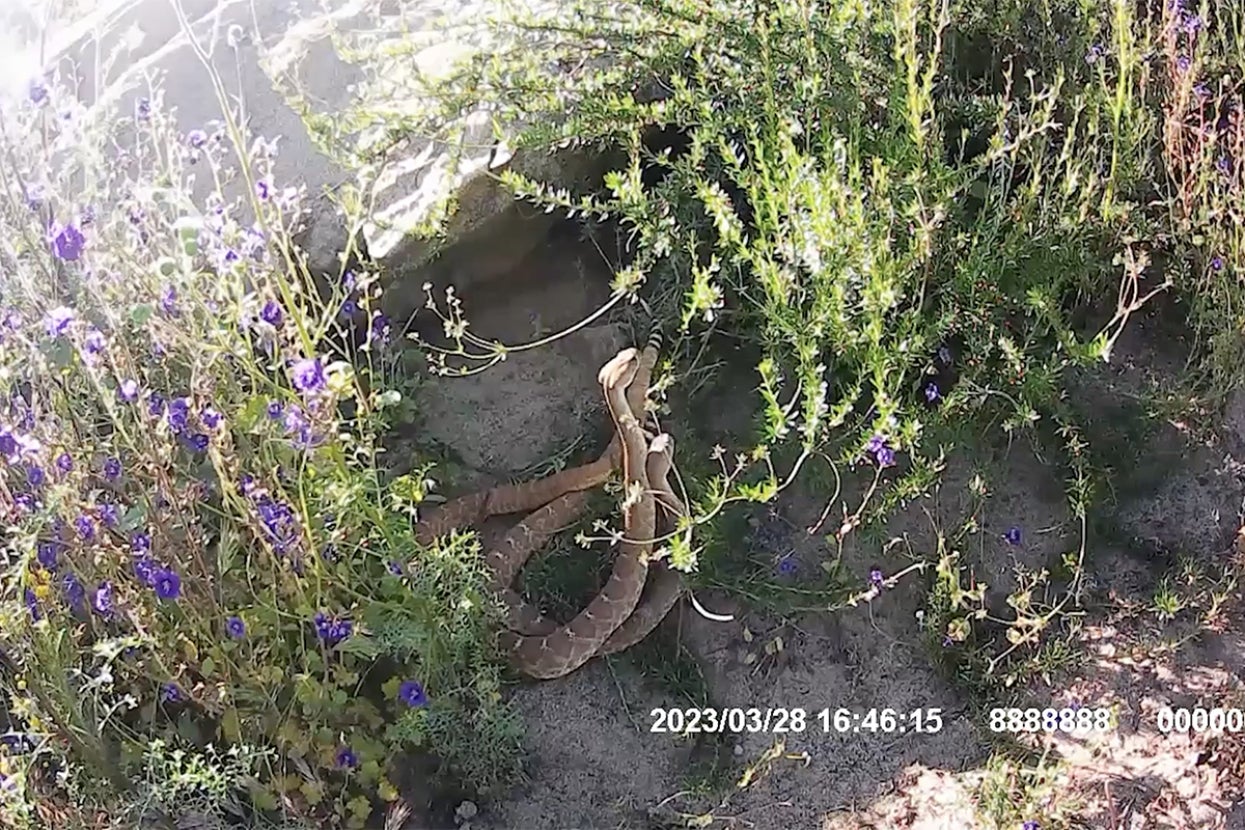
Trail cameras are just one way the Conservation Tech Lab gathers data in the Biodiversity Reserve.
Let’s back up a little, though. What exactly does the tech lab do in the Biodiversity Reserve? They primarily use the Sage Biodiversity Reserve Ubiquitous Sensing in Habitat system, more commonly called the SageBRUSH system. SageBRUSH is a landscape observatory that’s formed by an array of sensors distributed across the reserve. It’s remote, so our conservation researchers can view the collected data on a dashboard from the comfort of their lab.
Data is collected day and night through static and actuated cameras, microphones, thermal sensors, and more—all linked via a skeleton of high bandwidth mobile data stations. With data constantly being recorded, the system is backed by machine learning algorithms that comb it to create high-level reports about the Biodiversity Reserve. It provides potential answers to research questions about both the wildlife and landscape. An added bonus: since the data isn’t collected by human observers, we’re getting a true, uninterrupted look at how the ecosystem operates.
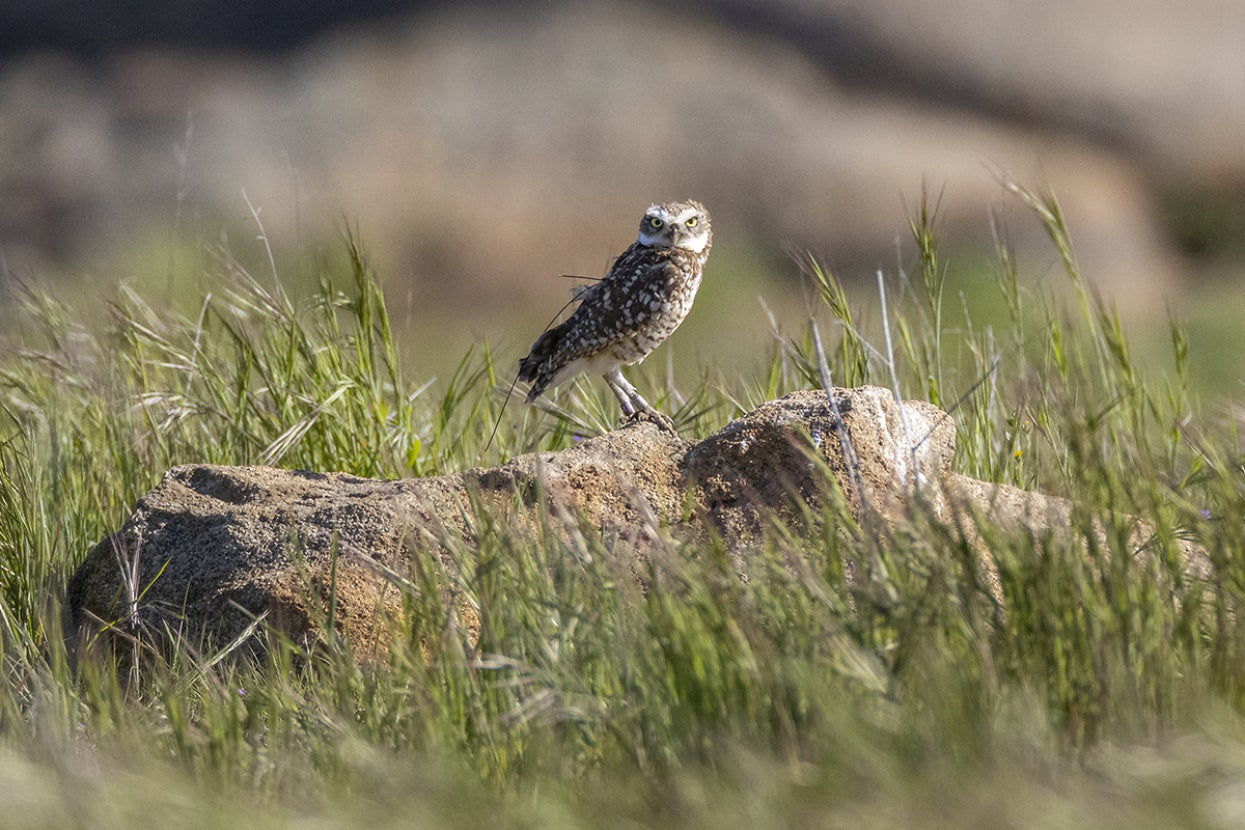
The Conservation Tech Lab deployed scrubmics—an AI-driven acoustic sensor—at field sites in San Diego County to learn more about populations of endangered burrowing owls.
Beyond the Biodiversity Reserve, the scrubmic—an AI-driven acoustic sensor—was recently deployed at a burrowing owl field site in Southern California. The scrubmic runs a sound classification model and then telemeters over a very low-power, long-range, low-bandwidth radio connection when it detects burrowing owl noises. After initial testing, scrubmics will eventually cover vast portions of San Diego and Imperial counties. This will help us understand the presence of this endangered species in a region that we historically don’t know much about.
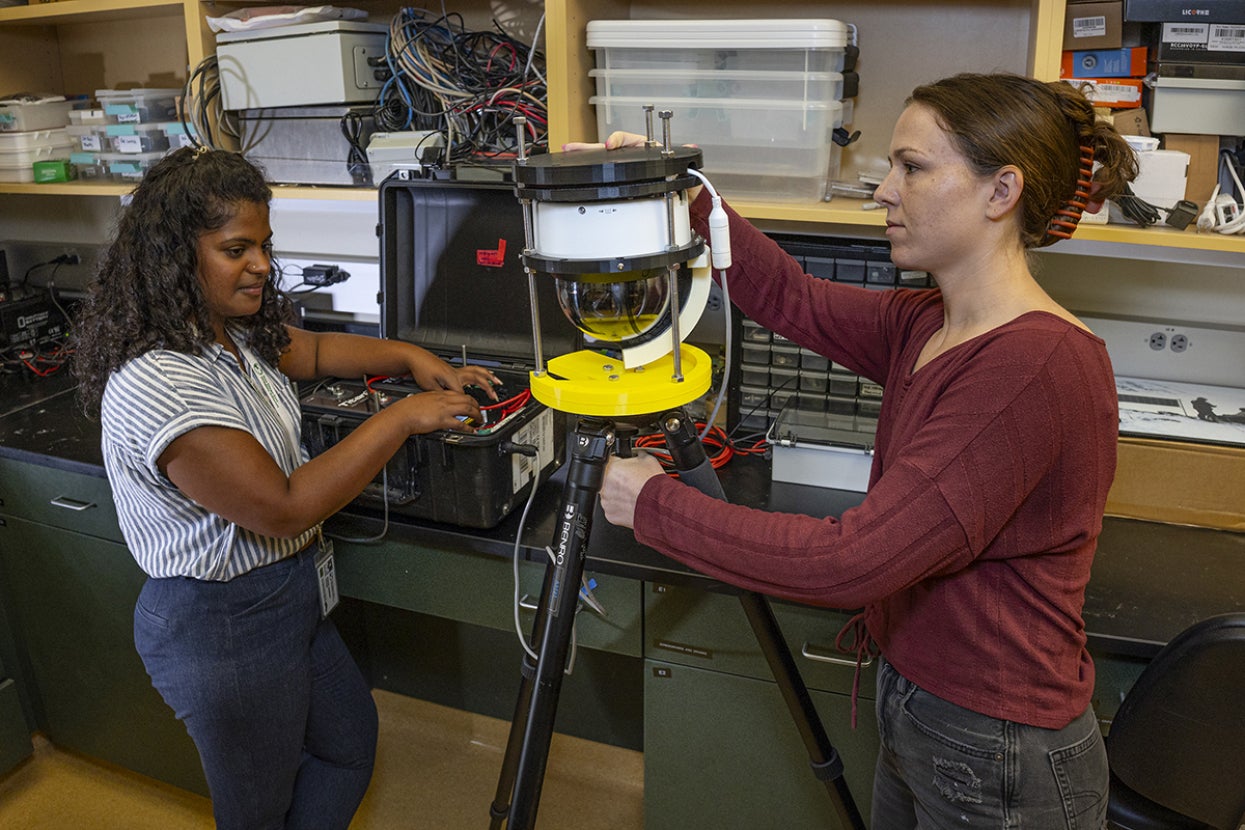
Researchers Sumega Mandadi and Katie Garwood test a prototype camera.
Today’s Experience, Tomorrow’s Scientists
The Conservation Technology Lab team also invests in students interested in the field. The lab runs three fellowship programs for engineering and computer science undergraduate and graduate students. There is one year-round program in San Diego, a similar one in Kenya, and a summer program open to students across the United States. This opportunity allows young professionals to gain exposure to the promising field and pursue their passion for wildlife conservation with San Diego Zoo Wildlife Alliance.
Technology is constantly evolving. Instead of racing to catch up to it, the Conservation Technology Lab is growing and progressing with it. This talented team is changing the game for wildlife conservation, and we’re only beginning to see the powerful difference they’re making for wildlife worldwide.
Stay tuned for more fascinating stories about their work.
Discover how the support of wildlife allies like you is making the Conservation Technology Lab’s strides possible for wildlife here in San Diego and across the globe through our eight Conservation Hubs.